
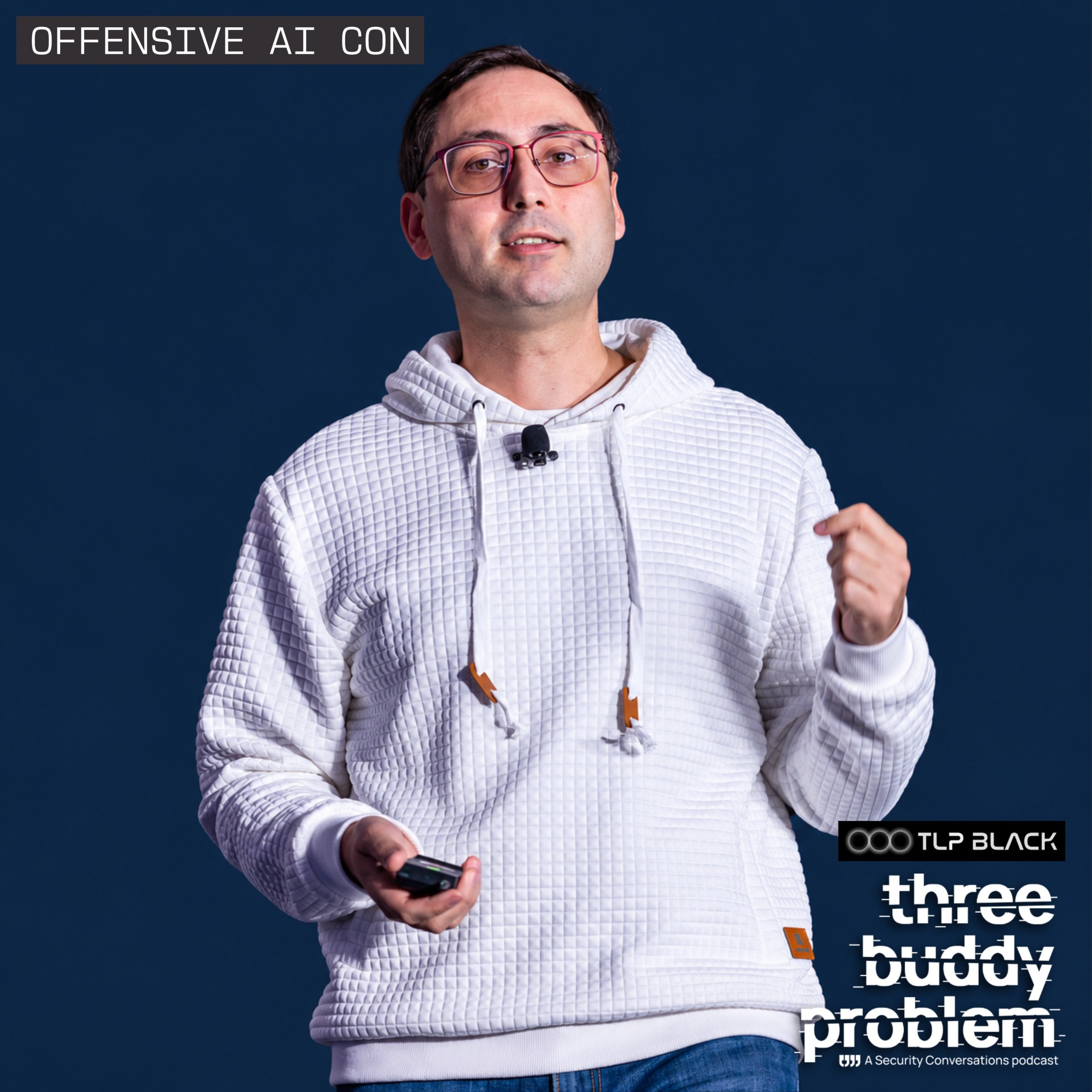
Joel Todoroff on How Offensive AI Is Rewiring Western Government Ops
Show notes
(Presented by TLPBLACK: A cybersecurity intelligence platform focused on sharing curated, high-sensitivity threat insights and research with trusted security professionals.)
Three Buddy Problem x Offensive AI Con: Former US intelligence and national security official Joel Todoroff joins us live from OffensiveAIcon to explain why his new startup Phyle is building AI for the recon and targeting work that happens long before anyone fires an exploit.
We get into bribable sysadmins, the military framing that boxes in Western cyber operations, letters of marque, AI doomerism, and what happens when a frontier model decides mid-project that your use case is off-limits.
Cast: Juan Andres Guerrero-Saade, Ryan Naraine and Joel Todoroff.
Timestamps:
0:00 Live from OffensiveAIcon in Oceanside
1:23 What Phyle builds for governments
3:02 Skepticism of the AI 0-day factory
5:57 Paying a sysadmin vs. burning tokens
9:30 Recon gets less love than weaponization
12:41 Exploit shelf life and target No. 1,000
17:30 Why attacker costs will keep rising
22:23 What HUMINT looks like in 2026
27:06 Why intelligence stovepipes persist
32:16 Cyber as statecraft beyond the military frame
41:23 People will keep making dumb mistakes
48:03 The White House memo and letters of marque
54:06 Doomerism vs. near-term AI harms
1:04:20 PSOA concerns and building guardrails in
1:26:03 Open models, guardrails and zero data retention
Links:
- Transcript
- Joel Todoroff: Georgetown University bio
- Joel Todoroff | LABScon
- Phyle — Automated. Rigorous. Relentless.
- Cyber Kill Chain | Lockheed Martin
- Trump admin empowers private US firms to go after transnational cybercriminals
- Hackers made death threats against this security researcher. Big mistake
- AIxCC marks pivotal inflection point for cyber defense | DARPA
- Microsoft: Continuing the fight against private sector cyberweapons
- TLPBLACK
← Previous
Valentina Palmiotti (chompie) on Vulnpocalypse, Matching Mythos on a Budget
Next →
Aaron Grattafiori Explains How LLMs Hunt Patch Variants at Scale