
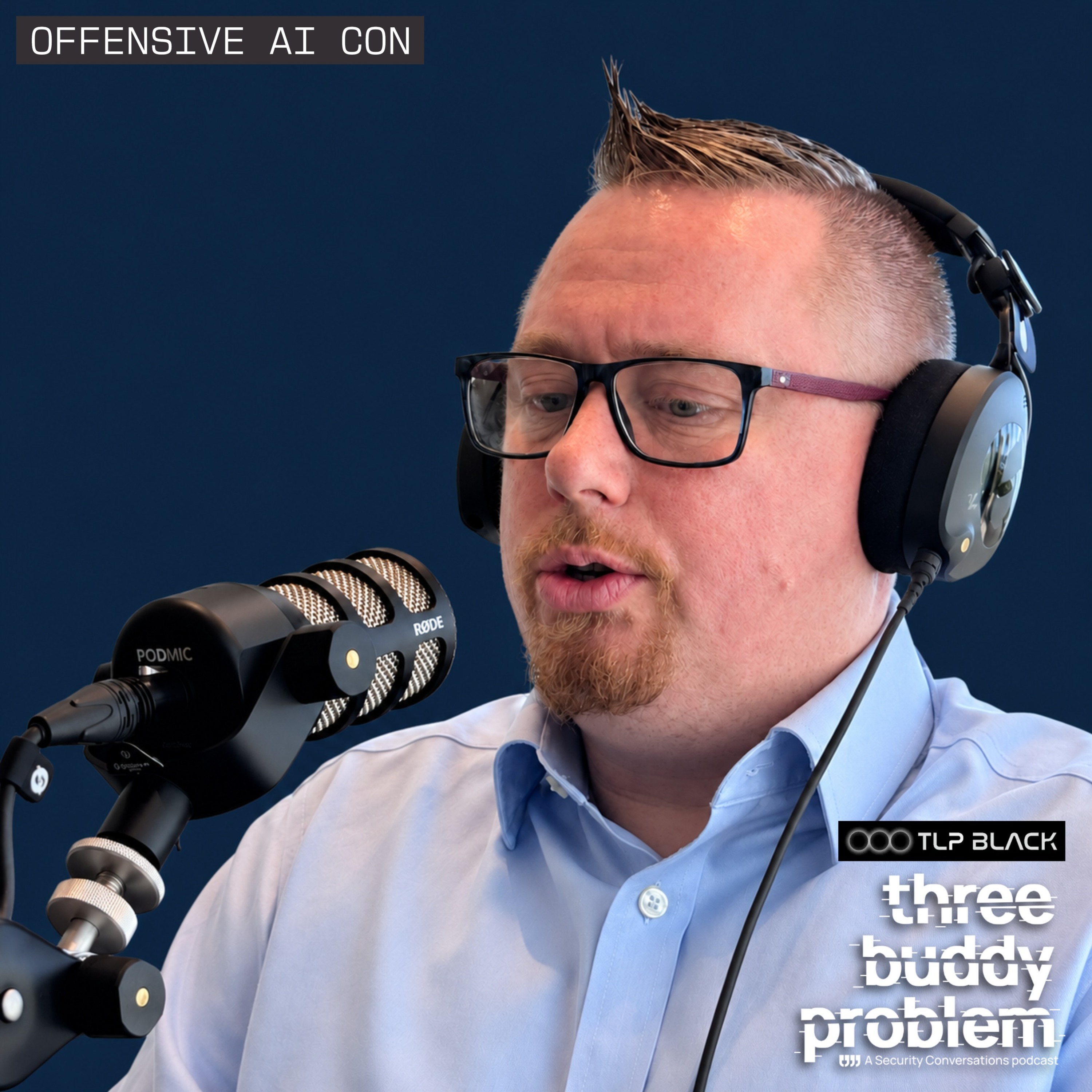
NCSC's Ollie Whitehouse: 'The Biggest Correction of Technical Debt Ever'
Show notes
(Presented by TLPBLACK: A cybersecurity intelligence platform focused on sharing curated, high-sensitivity threat insights and research with trusted security professionals.)
Three Buddy Problem x Offensive AI Con: Ollie Whitehouse, CTO of the UK's National Cyber Security Centre, joins us to explain how Britain is preparing for an AI-driven patch wave and why the NCSC is pressing edge-device vendors to finally ship real telemetry.
Plus, we dig into rogue AI agents wandering into a Five Eyes network, along with his forecast that small, capable models could revive self-spreading worms around 2030, all part of what he calls the biggest forced correction of technical debt the industry will ever see.
Cast: Juan Andres Guerrero-Saade, Ryan Naraine and Ollie Whitehouse.
Timestamps:
0:00 Live from Offensive AI Con: meet Ollie Whitehouse
2:46 Why the NCSC is a model for the US
6:48 What a "national technical authority" does
7:49 The Huawei analysis and the push for passkeys
10:50 Independent AI model testing
13:12 Open-weight vs. closed models and AI sovereignty
19:02 Capability density and AI worms by 2030
23:09 Robotics security and lessons from Japan
26:49 Preparing for the patch wave
31:06 Architecture fixes: OT, cross domain, privileged access
32:28 Telecoms security and Salt Typhoon
38:59 Minimum telemetry standards for edge devices
41:55 Market incentives and the EU Cyber Resilience Act
46:05 Rogue agents and the forced correction of technical debt
Links:
- Transcript
- Ollie Whitehouse bio
- Ollie Whitehouse | LinkedIn
- Ollie Whitehouse on Twitter
- Ollie Whitehouse's NCSC email newsletter
- NCSC: Preparing for a ‘vulnerability patch wave’
- NCSC: Managing the cyber risk of agentic AI
- Making forensic observability the norm for network devices
- Five Eyes unveil new guidelines to secure edge devices
- NCSC: Leave passwords in the past - passkeys are the future
- Huawei Cyber Security Evaluation Centre oversight board report
- Center for Advancing Innovation and Standards for Super Intelligence
- UK Cyber Security and Resilience Bill
- Telecommunications Security Code of Practice 2026
- Huawei cyber security evaluation centre oversight report 2019
- TLPBLACK
← Previous
Aaron Grattafiori Explains How LLMs Hunt Patch Variants at Scale
Next →
Katie Moussouris on AI-as-malware, the monitoring gap, and an NTSB for AI